
Showing posts with label Cities. Show all posts
Showing posts with label Cities. Show all posts
Wednesday, August 31, 2011
On Standing
I've already posted here about how much I adore David Simon. If he announced he was running for Mayor or President of anywhere, I would drop everything to help get him elected.
(To be fair, I say that knowing he will probably never be on a ballot. He has a much better job as a storyteller.)
This talk he gave in New Orleans really resonated for me. So much of the same stuff in Detroit right now. Suspicion of outsiders and newcomers. Insensitivity to external realities and commonalities. Criticism of ideas not on merit, but on some measure of "authenticity" or tenure or geography of the author.
And all this from folks who call themselves "progressive." It's a damn shame.
I think this quote sums it up pretty well:
"Everyone uses 'standing' as a shield. And it hides the fact that there are a lot of bad ideas that get credence, and a lot of good ideas that get ignored."
His anecdote about development in New Orleans and Baltimore hit especially close to home. If only we could think differently about what "progress" really means.

Tuesday, August 30, 2011
Motivations


Photos courtesy of rogue HAA
I really enjoyed being a part of this design conversation hosted by rogueHAA on August 16 at 2:1 Gallery. We were asked to think about what "motivations" (and ulterior motives) inspire us to do our work in the city, so it was a nice chance to revisit my mission and inspiration from Jane Jacobs, James Howard Kunstler, Jaime Lerner and others. It also gave me the opportunity to reflect on some of the things I've learned in my last decade here in Detroit.
Thanks to Melissa Dittmer and Jamie Witherspoon from Hamilton Anderson for including me in the discussion. Thanks also to Milton Curry, Kate Daughdrill and Stephen Vogel for sharing their ideas and experience.
Wednesday, June 8, 2011
WWJJD

This is my new temporary tattoo: "What Would Jane Jacobs Do?" Very helpful for neighborhood and city meetings when you're sure there's a better way, but you forgot to bring your copy of The Death and Life of Great American Cities.
Jane has been on my mind a lot lately. More than usual. It makes me happy when people invoke her, as both Professor Robin Boyle of Wayne State University and Tom Brennan of the Green Garage did just this last week.
I find myself wishing she was here. Lordy, she'd raise all kindsa hell.

Thinking about Jane, I remembered one of my very favorite statements she ever made. It was from an interview she did for The New Yorker back in 2004 as she was promoting her seventh and final book, Dark Age Ahead.
Today I took a moment to look it up. It still took my breath away.
From "Cities and Songs" by Adam Gopnick:
Her new book, despite its title, “is not gloomy,” she said. “But it is a wake-up call.” She believes that the fight for the soul of America is still on, and that it will be a battle, essentially, between cars and songs.
“Our songs are so strong, don’t you think?” she said. “I get awfully sick when I hear comparisons to the Roman Empire. They were so much grimmer than we are, the Romans, so lacking in emotions and sentiments. Our songs and cities are the best things about us. Songs and cities are so indispensable. Even if we go into darkness, the time will come when people will want to know how these ruins were made—the essence of the life we made. It sounds very conceited to say it, but I hope that what I wrote will help people start back.Cars v. songs. Isn't that so perfect? No wonder this city feels so embattled -- motors and music are Detroit's chief exports.
Which will prevail?
Sunday, May 15, 2011
Simon Says
David Simon is a national treasure. I will read or listen to anything he says. Even if it's devastating, which it usually is. After I watched this interview with Bill Moyers, I was blue for days. But he is a truth-teller of the highest order, and more people should pay attention.
Saturday, May 14, 2011
Hall of Fame
We all need heroes, and these are some of mine. The first time I heard Samuel Mockbee speak in college, it completely rocked my world. Ditto Bill Strickland years later. Seeing Jane Jacobs talk at the New York Public Library was one of those once-in-a-lifetime moments I'll never forget. And Kunstler's TED talk is still one of my very favorites ever.
These folks are like my "Dream Team" cabinet if I was ruler of the universe. I keep their words close for inspiration.
These folks are like my "Dream Team" cabinet if I was ruler of the universe. I keep their words close for inspiration.

On Beauty
by Bill Strickland (TED Talk, 2002)
"People are a function of their environment. Everyone deserves beauty, not just rich people."

On Suburban Sprawl
"Dissecting Suburbia" (19:48)
by James Howard Kunstler (TED Talk, 2004)
"The suburbs are the greatest misallocation of resources in the history of mankind."

On Environmental Justice
by Majora Carter (TED Talk, 2006)
"Injustice anywhere is a threat to justice everywhere. Oppose destruction with creation."

On Urban Planning
by Jaime Lerner (TED Talk, 2007)
"The city is not the problem, it's the solution. Not only for a country, but for the problem of climate change."

On Sustainable Design
"Cradle to Cradle Design" (20:03)
by William McDonough (TED Talk, 2005)
"What we seek is a delightfully diverse, safe, healthy and just world, with clean water, air, soil and power, that is economically, equitably, ecologically, and elegantly enjoyed."
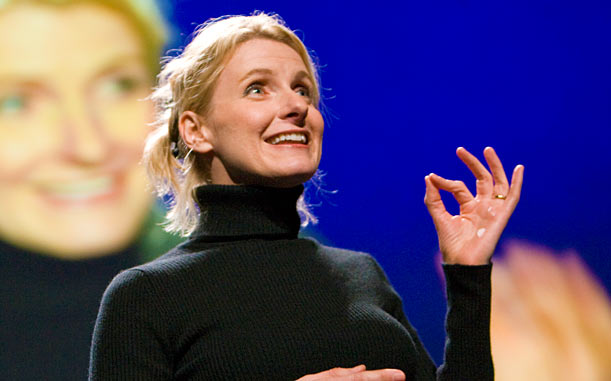
On Creativity
"Nurturing Creativity" (19:32)
by Elizabeth Gilbert (TED Talk, 2009)
"You were given life; it is your duty (and also your entitlement as a human being) to find something beautiful within life, no matter how slight."

On Architecture
"The Rural Studio" (4:39)
by Samuel Mockbee (Interview, 2000)
"Architecture has to be greater than just architecture. It has to address social values.”
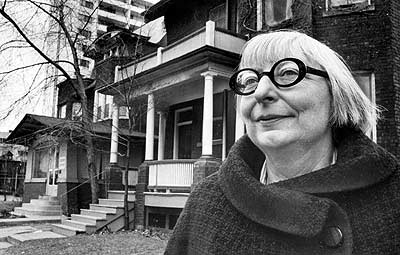
On Cities
by Jane Jacobs (Interview)
"We do need places to come together. Casual encounters with one another are important in learning trust, and learning to be civilized in the use of the public space.”
The Celluloid City
I'm a sucker for all forms of urban propaganda. Here are some of my favorite representations of the city in film, video and television:
Best Television Commercial Ever. American Express for the Tribeca Film Festival featuring Robert Deniro. Directed by Martin Scorsese, 2004.
Best Opening Film Sequence Ever. Music: Rhapsody in Blue by George Gershwin. Directed by Woody Allen, 1979.
Best Use of an Urban Public Space for Advertising. Produced by T-Mobile, 2009.
Best Supporting Role by a City Landmark. Starring Cary Grant and Deborah Kerr. Directed by Leo McCarey, 1957.
Best City Satire, Created by Fred Armisen and Carrie Brownstein for the Independent Film Channel, 2011.
Wednesday, May 11, 2011
Ideas for the New City
I stumbled upon this project today and think it's just the bee's knees. So so much good stuff here. 50 Ideas for the New City via Urban Omnibus.


Wednesday, April 13, 2011
Common Ground

A first-time customer visiting from New York City suggested this book to me the other day, so I looked it up. The first chapter alone was SO spot on, I thought I should transcribe a few excerpts here for future reference. Just so I don't forget.
In the following passage, the author, Matt Hern, is writing about East Vancouver, British Columbia -- which is decidedly different than Detroit. But, obviously, many of the themes are universal. I suspect I'll be quoting this again & again.
Common Ground in a Liquid City:
Essays in Defense of an Urban Future
Essays in Defense of an Urban Future
by Matt Hern (AK Press, 2010)
“I think the real issue is how to create an organic, unfolding city – what Christopher Alexander calls a living city; one that isn’t run by bureaucratic planning or rampaging developers but is allowed to unfold, driven by a million decisions made by people on the ground. A city should be the best of humanity; an ethical union of citizens drawn together by mutual aid and shared resources. Think of libraries, parks, public transit, movie theaters, patios, coffee shops, bars, beaches, plazas, festivals – everything that makes a city great. All of that is about sharing resources so we don’t have to be walled off by ourselves buying and hoarding our own books and DVDs, hiking on our own property, drinking by ourselves, driving our own cards, isolated, and atomized.
And that sharing means public space or, better yet, common space. And that’s my definition of urban vitality: constantly running into people who aren’t like you, who don’t think, look or act like you, people who have fundamentally different values and backgrounds. And in that mix there is always the possibility to reimagine and remake yourself – a world of possibility that is driven by public life and space, that at its best turns into common places and neighborhoods. That’s what makes a great city, not the shopping opportunities.
It’s more than that, too. Cities are the key to any ecologically sustainable future. There’s just no way seven billion people can spread out across the globe. Living densely, shortening distances we have to travel, reducing our physical footprint, sharing resources, sharing energy is the only way that this is possibly going to work ecologically. To make that happen, cities have to become more urban, not less.
Looking at cities all over the world today though, it’s pretty fucking hard to imagine them as radical generators of sustainability, diversity and vitality. Globalization, colonialism, and corporate expansionism have rendered the cores of most cities virtually indistinguishable from one another. Downtowns everywhere have the same Mickey Ds and Burger Kings, the same Gap, Prada, Benetton and Zaras, the same gleaming towers, the same parking lots, the same rhythms.
And it’s not just downtowns. The Western world’s rush for the suburbs is being replicated all over the globe as urban regions are reconfigured for massive private-car use. Cities are being replaced by massive, megalopolitan stretches of faceless urbanization where it’s impossible to tell where one place ends and the next starts and traditional cities are surrounded by endless expanses of freeways, movie multiplexes, Wal-Marts, industrial parks, gated communities, malls, mini-malls and mega-malls.
I think we still have a real chance to remake this city using some compelling, radical urban traditions and examples.
But that remaking is going to require commitment and discipline. The city continues to pour its resources and energy into attracting investment, courting high-end tourists, building infrastructure for developers and international trade and doing anything and everything to pimp ourselves to the highest bidders. But that strategy is unsustainable by definition.
We have to reject that juvenile economic and cultural logic and build meaningful ways to live on this land without destroying it. That has to mean reimagining this city as self-reliant and constructing a thoughtful re-localization of pretty much everything. That’s not to confuse re-localizing with parochialism, but it is true that it will mean a constriction of the economy. To my mind, that offers up huge possibilities for alleviating inequity: The logic of neo-liberal growth is what has got us into this spot, and it’s not getting us out.
An ecological and an ethical city is one and the same thing – we can’t have a “green” city without reimagining our social institutions. And that can’t be made to happen by relying on politicians or planners or developers. They can’t lead, they have to get out of the way and allow the neighborhoods, communities, public spaces and common spaces that make a great city to become the ongoing expression of a constant series of choices made by everyday citizens.”
Sunday, March 27, 2011
City Love

I love love. And I love cities. So imagine my delight when Peter Kageyama requested an interview for his book about our love affair with cities.
"Hey, I want to write that book!" I remember thinking as Peter described his thesis. Our emotional connection to place has always been a little obsession of mine.
But I knew Peter would write a good book, and he was a good person to do it. He's been working in this space for some time, bringing together experts and practitioners around the subject of place-making. And this "city love" was definitely a topic deserving of further exploration.
I felt lucky to be asked to offer my two cents and then get to read what he had to say. If it meant that Detroit might be mentioned once or twice in a favorable light, that would be even better.
* * * * *
* * * * *
The first time I met Peter was at his Creative Cities Summit in the spring of 2010. A group of us from Detroit - Phil Cooley, Sean Mann, Eric Cedo & me -- piled into a van and drove down to Lexington, Kentucky to present at the annual national conference organized by Peter & his team.
This would be my first time attending the Summit, but not my first "Creative Cities" event. Back in 2001, I coordinated a conference in New York by the same name. The keynote speaker was Charles Landry, who had just published his book "The Creative City." The conference was presented by Van Alen Institute (where I worked at the time) along with The British Council and the Port Authority of New York & New Jersey. Hosted at MoMA P.S.1, it was a dialogue between London and New York about the role of creative industry in urban regeneration.
When we began planning this conference, it was the first time I had heard the term "creative city." Mr. Landry had coined the term in the UK back in the 80's, but it was a newer idea stateside. This was the point of the event -- to bring some new thinking to New York, where development was driven by a decidedly uncreative real estate community.
 According to Landry, the old way of doing things focused on the physical infrastructure (or "hardware") of the city, with not enough attention to a city's "software" -- the human dynamics of a place. Landry called for a culture of creativity among urban stakeholders to nurture ideas and imagination, and to stave off the threat of homogeneity and the degradation of our built environment.
The conference was conceived and planned in advance of 9/11, but occurred just shortly after. Needless to say, it took on all new meaning in the aftermath of the attack. The fact that our conference partners at the Port Authority worked in the World Trade Center made this topic even more personal and relevant. In fact, just days before 9/11, I had been sitting high up in their WTC office, looking down over Manhattan, as we confirmed our plans.
All this to say -- it was a kind of "full-circle" moment for me to be asked to speak at this conference nine years later. From post-9/11 "renewal" of New York, to our post-industrial "reimagining" of Detroit, my life and perspective had changed quite a bit.
This would be my first time attending the Summit, but not my first "Creative Cities" event. Back in 2001, I coordinated a conference in New York by the same name. The keynote speaker was Charles Landry, who had just published his book "The Creative City." The conference was presented by Van Alen Institute (where I worked at the time) along with The British Council and the Port Authority of New York & New Jersey. Hosted at MoMA P.S.1, it was a dialogue between London and New York about the role of creative industry in urban regeneration.
When we began planning this conference, it was the first time I had heard the term "creative city." Mr. Landry had coined the term in the UK back in the 80's, but it was a newer idea stateside. This was the point of the event -- to bring some new thinking to New York, where development was driven by a decidedly uncreative real estate community.
 According to Landry, the old way of doing things focused on the physical infrastructure (or "hardware") of the city, with not enough attention to a city's "software" -- the human dynamics of a place. Landry called for a culture of creativity among urban stakeholders to nurture ideas and imagination, and to stave off the threat of homogeneity and the degradation of our built environment.
The conference was conceived and planned in advance of 9/11, but occurred just shortly after. Needless to say, it took on all new meaning in the aftermath of the attack. The fact that our conference partners at the Port Authority worked in the World Trade Center made this topic even more personal and relevant. In fact, just days before 9/11, I had been sitting high up in their WTC office, looking down over Manhattan, as we confirmed our plans.
All this to say -- it was a kind of "full-circle" moment for me to be asked to speak at this conference nine years later. From post-9/11 "renewal" of New York, to our post-industrial "reimagining" of Detroit, my life and perspective had changed quite a bit.
* * * * *
In Lexington, Mr. Mann did a great job moderating our panel, starting with myths and misperceptions about Detroit, and ending with a slideshow we created of our projects and neighborhoods.
The highlight of the trip for me (maybe second to Mr. Cooley kindly footing the bill for our $70 glasses of bourbon, which taught me to request a pricelist first next time), was meeting my Personal-Hero-and-Favorite-Living-American, Bill Strickland, from Manchester Craftmen's Guild in Pittsburgh. I had fallen hard for Mr. Strickland several years back, and to be listed in the same conference program with him was a city geek's dream. When I shook his hand, I had to keep myself from saying, "Take me with you. I will do whatever you need."
So that was a thrill, and I was grateful to Peter for giving us the opportunity to tell our Detroit story to a national audience. As we all know, the dominant Detroit narrative is one of decline and despair, so it is always nice to be asked to share an alternative view -- one of pragmatic optimism, creative problem-solving and grassroots civic engagement.
* * * * *
The second time I met Peter was in Detroit at Phil's home, where we got to do some more sharing about our various projects in the city. Again, I was in good company -- Phil, Sean, Eric, Francis, Matt & Kim Clayson, Kate Daughdrill, Vanessa Miller -- all comrades in place-making and community-building. Peter asked great questions, and we shared some of our aspirations and frustrations over sweet barbeque & wine.

Dinners like these represent some of my favorite moments in Detroit. There's nothing I love more than being in a room with smart, passionate people talking about the city. I learn so much -- especially when we don't all agree on something. (This happens more than you might think, actually.)
How did I get on Peter's radar to begin with? Not sure exactly. Likely, some combination of Paul Schutt, Brian Boyle and Dan Gilmartin. These dudes, along with Lou Glazer, David Egner and Katy Locker, have been really phenomenal about making introductions and putting microphones in front of emerging voices for some time now. Every panel discussion or interview I've ever done traces back to one of them somehow, and the importance of this cannot be overstated. They know that the future of Detroit depends on elevating and empowering new leaders, and they have been critical connectors between artists, entrepreneurs, media and decision-makers.
Some of my friends in Detroit roll their eyes that the "same people" tend to get a lot of attention -- and by "same" they mean people like Mr. Cooley, and maybe myself. But I remember a time when the "same people" was the suits -- older CEOs and bureaucrats, not twenty or thirty-something urban advocates and social entrepreneurs. This is a big deal -- a broadening of our civic discourse, and maybe a narrowing of a generational gap.
Not yet sure if the old guard is really listening, but I am grateful for any invitation to be a part of a conversation about the city.
* * * * *
Eventually Peter & I would have a nice long chat, just the two of us. I told him how I came to live in Detroit, how I started my business, why Liz Blondy & I launched Open City, how a group of us came together to write the Detroit Declaration. We traded ideas about what makes people passionate about place, and I learned a little about his research in Cleveland, St. Louis and New Orleans. (I'm always curious how Detroit compares to other places.)
I can't recall all that I said in that interview, but I do remember trying to articulate one possible discrepancy I've struggled with for nearly a decade now. Yes, I LOVE cities -- I've always loved cities. There are a million reasons why, and they run the gamut from philosophical to practical to emotional. But my love of this particular city, Detroit? It's a little bit more complicated than true love. In fact, it's really more of a love/hate kind of thing. (I've written about this before here.)
I was concerned I might misrepresent myself, and I didn't want to be dishonest. If I said that everything I do in Detroit is motivated by a deep, abiding, unwavering love for this place -- that would be false. Any of my friends know that I complain about Detroit as much as I celebrate it. I am not like many Detroiters who love their city unequivocally, just as it is, for better or worse. Some days I suspect I am moved more by frustration than adulation. Some days this place makes me completely crazy.
But, to Peter's point -- there is definitely emotion there. Enough emotion, apparently, to keep me engaged.
I assumed our conversation would mostly serve as background for Peter's investigation -- you know, just to shore up his premise that yes, there are in fact some crazy people like me who care an awful lot about place. (Like as much as some people care about their favorite pet or sports franchise.)
When I received my copy of the completed book, I was a little nervous to see my name in the index. Like, with page numbers after it. Good lord, what did I say? I mean, a book has a longer shelf life than an article, right? A casual remark could haunt me for a very long time.
Apparently I had a couple of strong opinions. And I know I said them just as they were written, because a) Peter was recording our conversation, and b) they're not super eloquent.
The best part of Peter's book is that it features Detroit so prominently as an example of a city full of passionate people. We all know Detroit gets plenty of negative press, so it's always nice when people recognize something special here and share that with a national audience. It's a nice kind of validation, I guess.
For the Love of Cities can be purchased on Amazon. I hope people will buy it, read it, and discuss it. Especially people who hold the power and purse-strings to create change here. Because if we're going to create places that really matter, we need our leaders to lead with love. Or step aside and let the lovers lead.
Sunday, January 2, 2011
Ten Reasons We Wake Up Every Morning
For our presentation at the CEOs for Cities Urban Leaders Summit in November 2010, Sean Mann & I made a little slideshow. We called it "Ten Reasons We Wake Up Every Morning in Detroit."
The idea was to create a kind of highlights reel of some of our favorite things happening in the city right now. Not the big investments so much as the small-scale, street-level activity.
It's obviously much better when narrated by Sean, but below are the raw images sans commentary:
The idea was to create a kind of highlights reel of some of our favorite things happening in the city right now. Not the big investments so much as the small-scale, street-level activity.
It's obviously much better when narrated by Sean, but below are the raw images sans commentary:
At the Summit, Sean & I were joined on-stage by Austin Black & Sandra Yu for some storytelling followed by Q&A from Benji Kennedy.
Thanks to Katy Locker for inviting us, and to Carol Coletta for being one of the first fans of the Detroit Declaration. It might be the only time I'm on a program with the likes of Mayor Richard Daley.
For a full synopsis of the summit, click here.
Monday, September 6, 2010
My Romance
My romance with cities started early. I credit my parents—they were always good about taking us downtown to Chicago. Mostly to the kinds of places you get dressed up for—museums, theaters, that sort of thing.
Certainly that colored my thinking, hanging out in all those pretty places. Now I understand it's only one dimension of any city. But for better or worse, it was my point of entry. It was also, thankfully, the spark of a flame that still burns brightly today.
As a child of the suburbs, I always loved watching the skyline come into focus, and then crossing the threshold into a big exciting new world. Walking in the shadows of skyscrapers and navigating crowded city sidewalks was magic. I could sit on a park bench for hours watching the hum of human activity around me. (Still true today—give me a table at a sidewalk cafe, and I'm AOK.)
Chicago was alright, but New York seemed even better. Bigger, brighter, more globally significant. My grandparents gifted annual subscriptions to the New Yorker, and I devoured any movies made by Woody Allen or Martin Scorsese or Spike Lee.
Then there were the postcards from my globe-trotting aunt, mailed from places like Beijing and Amsterdam and Istanbul. Seeing beyond the bright lights to darker corners only enhanced the allure. I fantasized about hanging out in Left Bank cafes and Harlem jazz clubs. I was pretty sure I was born in the wrong place at the wrong time.
Mostly, I was enchanted with cities because they seemed to have the very BEST of everything. The greatest architecture, the newest fashions, the most promising young filmmakers. All my favorite writers and musicians lived there. And for starry-eyed hopefuls, it was like this universal rite of passage: "If I can make it here, I'll make it anywhere."
I just loved all of that aspiration bursting from studio apartments and soaring towers and crowded subways. Waiters and taxi drivers, artists and traders—all riding the same trains and buses, dreaming of making it big. The density and diversity of activity was intoxicating. I couldn't get there fast enough.
Eventually I would. New York, Washington D.C. and Paris to live, lots of other cities to visit. I would study architecture and urbanism, I would work in jobs to celebrate or improve the physical city. And I would come to take for granted the importance of place and why cities matter.
Until I came to Detroit. Here, everything I loved about cities was different. Everything I knew had to be reconsidered—sometimes reaffirmed, sometimes relearned. The very basic tenets of urbanism—like the importance of dense, walkable, mixed-use neighborhoods (and all of that other good stuff Jane Jacobs wrote about from 1960s Greenwich Village)—weren't necessarily a given in the Motor City.
After all, the value of land was all topsy-turvy here. Often assets were regarded as liabilities. In New York, we fought to preserve open space; here, there was too much. Where they tore down to build bigger, we demolished for less. We seemed to be awfully good at making parking lots in places where other cities made public spaces. And I was struck by the absence of civic leadership demanding another way.
This was in 2002. It was a jarring transition. Sometimes disappointing, sometimes downright infuriating. But over time I would begin to understand. When you're stuck in survival mode, just trying to keep the lights on, vision and long-term thinking feels like a luxury you can't afford. I've been there myself, just trying to pay the bills. You fall into bad habits of deficit management when you should be seeking creative alternatives.
Eight years later, the needle has moved. A little bit or a lot depending on whom you ask. More local leaders talk about smart growth and adaptive reuse as vital components of economic development. We've gone from "what if" we had mass transit to "how" and "when." That's something. Even as the population shrinks, there are more voices demanding and creating change.
It's exciting to be a part of that movement. You learn to celebrate small victories—a building saved, a small business opened, a good candidate elected. The pace often feels glacial in the face of urgent challenges, but there are signs of hope everywhere. The grassroots activity—the artists and activists and entrepreneurs working at street level—is SO good. That's the upside, that's what keeps me interested and engaged.
But the high-level decision-making around here really blows. What we do in the name of "development" is too often desperate and destructive. We don't plan, we react. We scratch itches, we miss opportunities, we fear change—and then we wonder when that renaissance we keep hearing about is really gonna happen.
Some people claim to love Detroit exactly how it is. I am not one of those people. My relationship with this city is complicated. It's a love/hate deal, and I'm still learning to accept that tension—to embrace it even. It's not easy to dwell in that space between acceptance and intolerance of the status quo. What things should be given time and space to work themselves out naturally? What things MUST change?
In my humble opinion, decades of disinvestment in Detroit demand some pretty major corrective measures. We need more regional leaders committed to undoing what James Howard Kunstler calls "the greatest misallocation of resources in the history of the world." Sprawl has severely undermined our city, and until we all agree that the region won't flourish without a strong core, our greatest assets (human capital, infrastructure, innovation) will continue to erode.
We talk a lot about the past around here. Sometimes it feels like we're stuck in a blame game. We spend too much time making excuses and fighting old battles. We point to corrupt politicians, we fault the media. Past mayors, white flight, The Big Three, the unions—everyone has their favorite public enemy. Sometimes I want to stand atop the tallest, emptiest building and yell: "Can we just agree it was ALL of the above and move on already?"
To be sure, there are some very important lessons to be learned from our history. If we don't study and understand, we are bound to repeat mistakes. But I'm more inspired by people who seek out solutions and best practices. The historical and political bullshit can paralyze you if you let it. We need more forward thinkers and bold ideas. We need to be less afraid of taking risks and testing new ideas. And we need to create the conditions for creativity to flourish.
That's a big shift for us. We're talking about culture change here.
Recently, we're also talking a lot about storytelling—how to do a better job of writing our own story instead of letting others do it for us. Most agree that Detroit has been dogged by persistent misrepresentation in local and national media for much too long. What bleeds leads, and all those doom & gloom headlines have only reinforced negative perceptions of the city—which, in turn, undermine our ability to attract people and investment.
Some say we have a perception problem, others say we have a reality problem. I think it's pretty clear we have both. Anyone who says Detroit is dead or not worth saving doesn't know what they're talking about. And anyone who defends Detroit just the way it is is foolish.
The challenge here is to avoid hyperbole. It's a fucked up place, it's a beautiful place. It's in a downward spiral, it's in the midst of renaissance. If you spend enough time here, you'll find that both of these are true.
But the real Detroit dwells somewhere between our two dominant narratives. And part of the challenge and opportunity for those of us who live here is to communicate our own truth as honestly and loudly as possible.
As the oh-so-wise Chimamanda Adichie explains:
"The problem with stereotypes is not that they are untrue, but that they are incomplete. They make one story the only story. It robs people of dignity. It makes our recognition of our equal humanity difficult. Stories have been used to disposses and to malign, but stories can also be used to empower and to humanize."So the Detroit story I try to tell everyday is one of opportunity and possibility—of creativity and community flourishing in unexpected places. It's a story that can't be told enough: passionate people doing great things in complete defiance of an uncreative establishment and a challenging environment.
From my perch behind the counter of my little shop, I get to meet all kinds of people who are remaking themselves, and, by extension, their city. The best ones aren't missionaries here to "save" Detroit. They're just doing their thing to bring truth and beauty and meaning to their own lives, which in turn creates more vitality and opportunity around them.
This energy and tenacity is contagious, so I try to put myself in the middle of it whenever possible. I surround myself with people who want the best for themselves and their city and aren't waiting for an invitation or perfect conditions to do their thing.
But every once in awhile, when I see that good energy thwarted by larger forces, I get angry. That's when I trade in my Detroit cheerleader hat for my critic cap. If I complain and cajole, it's just because I care.
So yeah, my love affair with cities is a bit more nuanced now than it was as a romantic teenager. Where I used to marvel at verticality, I now see stratification. And once in awhile, all of that glorious ambition in one place can feel more inhumane than inspiring. The point is not to crush humanity, but to nurture and celebrate it. Healthy places find ways to strike this balance.
But even as I question the prosperity and hubris that built our cities, I have found a new reason to love them. In a world of diminishing resources, concentrating ourselves in urban centers is more important than ever. Occupying less space, sharing public amenities, retooling old buildings and infrastructure instead of constructing new are more efficient, more sustainable, more responsible ways of living and doing business.
After all, if you care at all about protecting the natural environment, the best thing you can do is stay away from it. Live in a city.
Or if you care about innovation—of any kind, really, whether technology or democracy or gastronomy is your thing—cities are designed for that. The exchange of ideas, the diversity of people, the mix of culture and commerce—all this density of activity breeds serendipity and opportunity for new ideas to emerge and propel us forward.
It's like what E.B. White once wrote about New York:
"It is to the nation what the white church spire is to the village—the visible symbol of aspiration and faith, the white plume saying that the way is up."This, in a nutshell, is why I love cities. And this is what I want for Detroit. To be a beacon pointing towards a better future. To have the audacity to be the very BEST.
Can we do that? I think in many ways we already are. We just gotta learn to better recognize and nurture it when we see it.
Sure, the "best" may look different to you than to me. But that's the beauty of cities— multiplicity. No single choice or voice. Just a collective chutzpah that says, simply, the way is up.
Subscribe to:
Posts (Atom)