Friday, June 17, 2011

Healthy City Love


So you say you love Detroit. Lovely! It's really nice to hear people say that. Especially on days when the headlines are especially grim. 

I've said it before, and I'll say it again: Detroit isn't always an easy place to love. Like today, when a beautiful landmark building is being demolished not far from where I sit. It's killing my appetite. (And I have a very healthy appetite.)

But back to you. You're a big Tigers fan. And you love Slow's BarBQ. And you're really excited to see the city "coming back." You even write about it on your blog. You've got spirit, yes you do. You believe in Detroit, and you want to help. Thank you!

But can we talk about this "believing" thing for a second? Like honestly, without getting all divisive or defensive? Can we talk about Detroit Love?

When the "I'm a Believer" campaign launched last year, a lot of my city-resident friends rolled their eyes. Yes, including moi. The end goal was great -- mobilizing volunteers to mentor children and clean-up parks and pitch-in to help the city. But the message and the delivery of the campaign was poor, and it got a lot of us talking about why. 

The organizers of the campaign didn't say it outright, but it was really designed for metro-Detroiters who don't live in the city -- maybe people who left for the suburbs and never looked back. They were hoping to re-engage them, which, to my mind, is a very worthwhile pursuit. We need all hands on deck around here.

That said, one of the criticisms was that "believing" in Detroit just isn't enough. Detroit needs more than faith or spirit or pride -- it needs true ownership and investment. Residents and businesses, neighbors and stakeholders. Volunteering once a month at a school or a soup kitchen is a very nice way to demonstrate your Detroit Love, but it's only one dish on a much longer menu of civic engagement.

It got me thinking about what a healthy Detroit Love looks like. I don't mean a litmus stick -- like you have to pass some sort of test to prove just how much you care. That's lame. It's not a competition of tenure or tenacity. I'm not a fan when people play that game.

What I'm interested in is not how you feel deep in your heart, but how you show that. Do your actions match your emotions? Do you practice what you preach?

I am not one to hold every Detroiter to some strict standard of authenticity or identity. After all, I'm not from this city or state myself -- so naturally, I'm sensitive about the "real Detroiter" bullshit. I don't care if you were born in Troy or Timbuktu, if you're here now and you identify as a Detroiter, then you're a Detroiter. You can wear a Detroit Love t-shirt with no shame.

The other day I was confronted by two very different but equally meritorious types of Detroit Love. I was reading a column by Jeff Wattrick, one of my favorite local bloggers, who was probably railing against some sort of hypocrisy at City Hall, as he is want to do. In walked Jeanette Pierce, one of my favorite local boosters, who was leading visitors around town to show them all the good stuff happening here, as she is also want to do.

Here were two people, both truth-tellers of different varieties, showing their love for their city in decidedly different ways. One was questioning and agitating, the other celebrating and promoting. If I had to assign points for Detroit Love, it would be a very close tie.

After Jeanette left, I started doodling a pie chart. When it comes to Detroit, what's the right balance of optimism and criticism? Cheering and jeering?

And to take this one step further: What's a healthy distribution of one's personal time and energy? Is there an ideal ratio of heavy-lifting (advocacy, volunteerism, etc.) to just, well, living?

I have my own insecurities about this. There's so much I don't do. There are after-school programs that need tutors, community parks that need gardeners. A friend once questioned my priorities when I was spending more time on spreading the "Open a new business!" message than working to make sure the city was actually business-friendly. 

So I think about this a lot just for myself -- the civic responsibilities of being a Detroiter, and the wide array of activity that may or may not qualify as activism and engagement. In my humble opinion, opening a small business or curating an art exhibit can be forms of activism. So are basic everyday acts, like shopping locally, or maintaining a home in the city. I wonder how others weigh these against more traditional forms of social service or political action.


Anyway....the USDA's new "healthier eating" plate icon was top of mind, so I thought I'd turn my scribbled pie chart into a little infographic to illustrate a healthy meal of Detroit boosterism (see above). Or at least my own interpretation, anyway...

It's imperfect, but here are some of the main ideas I wanted to convey:

  1. Volunteerism is great, but ownership and investment is greater. Some would call for flat-out residency (either renting or owning, but definitely voting). I would agree that's the ultimate form of commitment -- but for this purpose, I'll just ask for some skin in the game. That could be a stake in a business, or an organization, or a property or neighborhood. Even if you lay your head outside of city limits, some sort of meaningful involvement and regular presence within the C.O.D. is important.
  2. Activism and criticism is not the opposite of promotion. To the contrary, advocating for reform is a necessary part of true Detroit Love. You're not dissing Detroit if you're questioning the status quo in an intelligent and solution-oriented way. We need more people with higher standards for municipal function and land-use and public education (the list goes on). Of course, to do this most effectively, it's best if you're a stakeholder. (See #1.)
  3. Consumerism is a very noble and needed demonstration of your Detroit Love -- just as much as volunteerism. Sometimes people ask, "I don't live in the city, but I really want to help. What can I do?" They might think they need to start some big new cause or campaign, but that's not necessary. If you have some extra money in your pocket, just start by spending it in the city. A meal, a gift, a piece of art, a night out on the town. Small businesses are the building blocks of strong neighborhoods, and Detroit's small businesses need all the help they can get. Buy local, and then go back home and tell your friends about it.

So those are my thoughts on my Detroit Love happy meal. I'll try to align my energies with this and see how it feels. Who knows, maybe I'll come back and adjust portion sizes. We shall see...

Wednesday, June 8, 2011

WWJJD


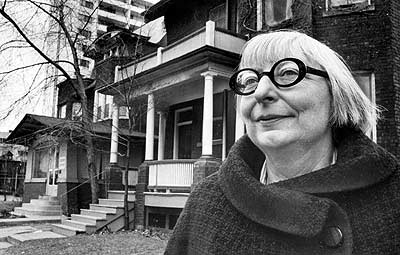
This is my new temporary tattoo: "What Would Jane Jacobs Do?" Very helpful for neighborhood and city meetings when you're sure there's a better way, but you forgot to bring your copy of The Death and Life of Great American Cities.

Jane has been on my mind a lot lately. More than usual. It makes me happy when people invoke her, as both Professor Robin Boyle of Wayne State University and Tom Brennan of the Green Garage did just this last week. 

I find myself wishing she was here. Lordy, she'd raise all kindsa hell.


Thinking about Jane, I remembered one of my very favorite statements she ever made. It was from an interview she did for The New Yorker back in 2004 as she was promoting her seventh and final book, Dark Age Ahead.

Today I took a moment to look it up. It still took my breath away.

From "Cities and Songs" by Adam Gopnick:
Her new book, despite its title, “is not gloomy,” she said. “But it is a wake-up call.” She believes that the fight for the soul of America is still on, and that it will be a battle, essentially, between cars and songs. 
“Our songs are so strong, don’t you think?” she said. “I get awfully sick when I hear comparisons to the Roman Empire. They were so much grimmer than we are, the Romans, so lacking in emotions and sentiments. Our songs and cities are the best things about us. Songs and cities are so indispensable. Even if we go into darkness, the time will come when people will want to know how these ruins were made—the essence of the life we made. It sounds very conceited to say it, but I hope that what I wrote will help people start back.
Cars v. songs. Isn't that so perfect? No wonder this city feels so embattled -- motors and music are Detroit's chief exports. 

Which will prevail?

Detroit Pride Project


Detroit Pride Project
Design by Joe Posch & Claire Nelson (June 2011)

I was super excited when I heard Motor City Pride, Michigan's largest LGBT celebration, was moving back to downtown Detroit where it began 25 years ago. I wanted to help, so I attended an initial planning meeting to find out what local merchants could do. My friend Joe Posch (aka Supergay Detroit) came up with the great idea to bring independent retailers and restaurants together for one big corporate-sized sponsorship. A bunch of us got on the phones, and forty-five businesses signed on. It was fun working with Joe on our full-page ad for Between the Lines. Seeing all those logos together -- many for new businesses opened by friends in the last 5-10 years -- warmed my heart. Viva the independents! For more info, click here and here.

Wednesday, May 18, 2011

Sprawl, Schmall

Two very different articles about Detroit came up in my Facebook feed today, one right after the other. The pair couldn't better illustrate the competing ideologies in our region right now. Which Detroit do we want to be?


(Click on each image to read the article.)


* * * * *

Oh, sprawl. I could have sworn we all agreed this was a very bad thing. Like a decade ago. Then I moved to Michigan, and I was astonished there were people like Mr. Patterson who still actively defended it.


So last summer, I was heartened when a metro-Detroit businessman named Andrew Basile, Jr. decided to take on sprawl as his personal mission. His open letter, written in the form of an ultimatum, made the rounds via email and got many of us talking.

I agreed with every word and was grateful for Mr. Basile's willingness to speak up and potentially ruffle some feathers. My only problem was the small matter of Mr. Basile's geography: His office was located outside the city, in the suburbs. He was part of the very "soul-crushing" sprawl he himself was admonishing.


"Why doesn't he move his firm into the city?" some of us city dwellers asked. If more smart folks like him would commit to moving downtown and building greater density in our urban core, then maybe we'd actually have a chance at reversing this trend, no?


Months later I would end up meeting Mr. Basile at a holiday party. He said his letter had made him a few enemies, and I thanked him for that. Then, honestly, I forgot all about it until this spring, when Rustwire.com published his letter and James Howard Kunstler dedicated an episode of his podcast to the subject. (Click here to listen.)


I thought the podcast was great, so I followed up with Mr. Basile to ask how his efforts were going. I said if I could knock on the doors of every policymaker and executive in metro-Detroit to listen to this podcast along with me, I would. Then I would ply them with donuts and ask them to please, please consider moving their offices downtown.


Mr. Basile was quick to reply. He said he thought this sprawl v. density issue was a generational thing and suggested we direct our efforts to younger folks. "People over 50 just can't seem to comprehend any of this," he explained. "They just can't imagine that anyone would want to live in a city, much less Detroit."

As for moving his own firm downtown, Mr. Basile said he wanted to but had encountered four really tough hurdles with his staff: 1) A longer commute (most live closer to Troy than to Detroit), 2) Income tax, 3) Safety concerns (especially for women leaving work late and walking to their cars), and 4) Cost of parking.

I thought this was really interesting. Three out of the four were really about transportation -- even the "safety" issue. You can say all you want about real or perceived danger in the city, but the truth is this: Downtown's crime rate is much lower than national, state and metro averages. Criminals are not the problem; cars are the problem. They've created an urban condition that makes a lot of folks afraid to even walk outside. It's scary when the sidewalks are empty. 


The answer to empty sidewalks is not more proximate or affordable parking. The answer is more walking, biking and transit. More foot-traffic and more eyes on the street create better walkability & safety. (That's not opinion, that's fact. Jane Jacobs taught us that. Like decades ago.)


Mr. Basile is right: these hurdles need to be addressed. To my mind, part of that is promoting city living (to mitigate the commute issue). Part of that is building mass transit (also to mitigate the commute issue). And the other part is getting more employers to return to urban centers so that transit, safety and all of the other services & amenities people need and want will follow.


* * * * *


I've heard it a million times in my store and elsewhere: "When the City does this" or "If the City would do that. Then I would definitely consider moving my home or office downtown." The list of things people are waiting for is long. More retail & grocery options. Lower insurance & tax rates. Better police protection. Quality public education. 


"And how do you expect that's all gonna change without you here?" I often want to ask.


I think we need to put the cart before the horse more often. Reverse the accepted order of things. Not "if they build it, we will come," but "if we come, we can help build it."


I know that's a lot to ask. Especially for the over-50 set. They're comfortable. They may have lost their own children to other metro-areas. They may have lost new talent to other firms. But it's too late for them to radically change their lifestyles. Once you spread out, it's hard to contract. It feels like a compromise, a sacrifice, a concession.


Brookings fellow Jennifer Bradley recently addressed this in an op-ed for The New York Times called "Promoting Ungrowth":
"What we need is a new mindset. Physical growth has been a powerful American narrative, embodied in huge public expenditures from the Louisiana Purchase to the Interstate Highway System and the mortgage interest deduction. The nation now needs a parallel commitment to physical ungrowth. Ungrowth is not surrender but a phase of urban evolution."
"Surrender" is such an interesting word, isn't it? So un-American. Certainly, this is what Mr. Patterson must have in mind when he defends sprawl. Surrender sounds too much like failure. Or worse, complicity in Detroit's decline.


So instead, he throws stones:
"The next time somebody rubs your face in the word sprawl, take a long, hard look at that person.  Too often you will see some limousine liberal who long ago fled our cities. Now, they want others to go back and take their place. They want to use the power of government to force you back into a city, or a neighborhood, or a housing type they chose not to live in themselves. They want to force you back to the city to help purge themselves of their perceived sin of abandonment."
No force necessary. If Mr. Basile is right, then "limousine liberals" don't need to do anything. We can all just sit back and watch sprawl drive people away.

    Tuesday, May 17, 2011

    There You Are


    This is my beloved neighbor Janet Jones, proprietor of Source Booksellers, as captured by Noah Stephens for his photodocumentary project, The People of Detroit.

    Noah started the project in response to a Dateline NBC expose on the city that profiled a man who hunts, cooks and sells raccoons. "The implication being, of course, that things are so dire in Detroit that raccoon meat has become a staple food," explained Noah. "Well, I grew up on welfare in the city. I've never eaten 'coon, nor have any of my friends."

    Frustrated that national media coverage wasn't representative of his experience, Noah started chronicling the people he encountered in his daily life in Detroit.

    His portraits are beautiful. This might be my favorite. Janet is as warm and wonderful as she looks here.

    Most Detroiters share Noah's frustration with Detroit's representation in the media. A million local writers and bloggers have opined about it, so I won't waste too much time or space echoing their frustration. 


    But one of my personal annoyances has been with the nomenclature of revitalization. If I had my way, the following words would be stricken from all journalists' vocabulary:

    Frontier.
    Pioneer.
    Blank Canvas.
    Clean Slate.

    I understand why these words are used, but none of them are right. They suggest a "nothingness" that entirely misses the point of why anyone I know lives in Detroit. No place with hundreds of years of history and hundreds of thousands of residents is "blank."

    I'm not here because there is nothing here. I am here because of people like Janet. Her bookstore on West Willis is one of the several reasons I chose to live and work where I do. So when any reporter asks me if I see Detroit as a "blank canvas," or mistakenly calls me an "urban pioneer," I try to correct them. I am following in the footsteps of many, many people who came before.

    As artist Chazz Miller reminded me recently, "There's no new idea under the sun. It's just up to us to put our own view on them."

    Which is why I'm a big fan of what Noah's doing. Not only is he a talented photographer with a refreshing point of view, he's also a pretty smart dude. With each portrait, he writes a little story. His story about Janet is so right on, I just gotta share it here:

    "I used to live up the street from Miss Jones' establishment. I would stop in from time to time. Miss Jones would ask how I was doing and I would reply enthusiastically that I was 'Ahh, ya know. Still not dead...'  
    The conversation would often shift to the state of affairs in Detroit. I would complain about how un-cosmopolitan Detroit was; how businesses closed too early in the day; how there was a general lack of ethnic, cultural, and intellectual diversity. I would then fantasize to Miss Jones about moving to some other shining, bustling metropolis that had everything Detroit lacked. Maybe then I would feel more like I was living as opposed to just circumventing death.
    After all my bellyaching, Miss Jones would just matter-of-factly reply,  
    'No matter where you go, there you are.’"

    -Noah Stephens via The People of Detroit.

    Remembering Colin Hubbell


    Watch colin in Activism & Non-Profit  |  View More Free Videos Online at Veoh.com


    Video by Tom Hendrickson for the Colin Hubbell Fund.


    Written Friday, August 22, 2008:

    One of my last e-mails from Colin Hubbell said only this: “You are the bestest in the whole wide world!”  I’m not naïve enough to think that I was the only girl (or guy, for that matter) to receive such a message from him.   But I still swooned.  I always did whenever I saw him.  He was “love” and “cool” personified.  I adored him so.
    The last card I gave him said, “Please stop stalking me.”  It was a joke, of course – one of the highlights of my week was when he sauntered into the shop to pick up his mail and shoot the shit.  Even on the days he was dragging from chemo or radiation, he was still full of charm & charisma.  He would tell me how proud he was of his children, or the latest news about his development projects, or his take on the state of the city.  And he would listen with interest when I would spin my dreams about the neighborhood.  He was one of the few who shared my optimism and sense of urgency. I loved that about him.
    So we were roommates.  Or rather, I was his.  When I went to him in the summer of 2006 with my hair-brained scheme to open a retail shop on West Canfield Street, he didn’t try to talk me out of it.  He was on board from our very first conversation.  And when I look back on those initial chats, he really had no proof at all that I could actually pull it off. But for absolutely no good reason, he believed in me – and by the winter we had negotiated a plan:  I would open my shop in his office space on the ground floor of the Canfield Lofts – one of his projects, one of Detroit’s first loft conversion projects, and also, incidentally, my home. 

    For me, it was a dream come true -- my own shop in my own building!  Not only would my “downstairs” commute mean I would have the lightest carbon footprint in all of Southeastern Michigan (yay me!), I would also have the coolest roommate/landlord, bar none.  And believe me, for a new business owner who doesn’t know what the heck she’s doing, having someone like Colin in your corner makes all the difference in the world.
    So we opened the following spring.  And I’ll never forget the first thing he bought – a print for his wife, Trish.  It was a picture of two bicycles with a heart in the middle.  Oh, how I loved him for this!  He told me all about how before they had kids, when they were poor newlyweds, they would take long bike rides around the city.  He told me how the city was so different then.  It also reminded me of the first time I met him at Cityfest – he rode up to the City Living tent on his bike looking like an urban hippie on a mission. He was like this wonderful angel with attitude.
    You know how some people just “get” it?  Well, Colin was one of these people.  They are so few and far between, not a day goes by that I don’t count Detroit’s lucky stars for him.  He was grassroots and gratitude and gung-ho all the way.  When others didn’t really get the “ground-up” spirit of our new experiment called Detroit Synergy, he did.  (Of course he did!)  When I feared others wouldn’t understand my indie retail aspirations, I knew he would.  (Of course he would!)  And on days when the shop was slow or I was feeling a little punk, he would pick me up with his lovely foul mouth and his lovelier warm hugs.
    Watching him perform “Lean on Me” at his “First 49th Birthday Party” at Traffic Jam & Snug with his gorgeous daughter at the mic and a crowded room full of friends and family was one of the most touching moments of my life. I had to step outside, I was so verklempt.
    And I am verklempt today, knowing that Detroit has lost one of its finest. Please keep stalking me, Colin Hubbell! You are welcome to come hang out in the shop anytime.  The second stool behind the counter will always be reserved for you…

    Sunday, May 15, 2011

    Simon Says

    David Simon is a national treasure. I will read or listen to anything he says. Even if it's devastating, which it usually is. After I watched this interview with Bill Moyers, I was blue for days. But he is a truth-teller of the highest order, and more people should pay attention.


    Saturday, May 14, 2011

    Hall of Fame

    We all need heroes, and these are some of mine. The first time I heard Samuel Mockbee speak in college, it completely rocked my world. Ditto Bill Strickland years later. Seeing Jane Jacobs talk at the New York Public Library was one of those once-in-a-lifetime moments I'll never forget. And Kunstler's TED talk is still one of my very favorites ever.

    These folks are like my "Dream Team" cabinet if I was ruler of the universe. I keep their words close for inspiration.

    On Beauty
    by Bill Strickland (TED Talk, 2002)
    "People are a function of their environment. Everyone deserves beauty, not just rich people."

    On Suburban Sprawl
    by James Howard Kunstler (TED Talk, 2004)
    "The suburbs are the greatest misallocation of resources in the history of mankind."

    On Environmental Justice
    by Majora Carter (TED Talk, 2006)
    "Injustice anywhere is a threat to justice everywhere. Oppose destruction with creation."

    On Urban Planning
    by Jaime Lerner (TED Talk, 2007)
    "The city is not the problem, it's the solution. Not only for a country, but for the problem of climate change."

    On Sustainable Design
    by William McDonough (TED Talk, 2005)
    "What we seek is a delightfully diverse, safe, healthy and just world, with clean water, air, soil and power, that is economically, equitably, ecologically, and elegantly enjoyed."

    On Creativity
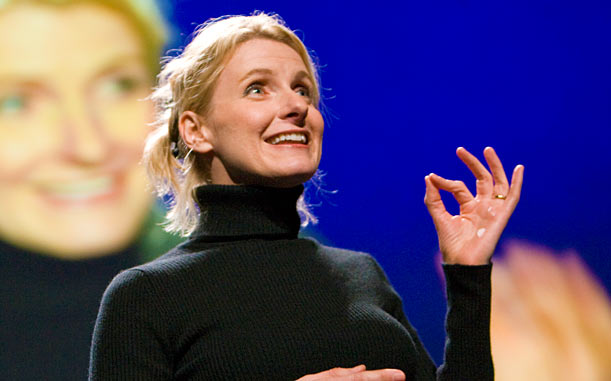
    by Elizabeth Gilbert (TED Talk, 2009)
    "You were given life; it is your duty (and also your entitlement as a human being) to find something beautiful within life, no matter how slight."

    On Architecture
    by Samuel Mockbee (Interview, 2000)
    "Architecture has to be greater than just architecture. It has to address social values.”

    On Cities
    by Jane Jacobs (Interview)
    "We do need places to come together. Casual encounters with one another are important in learning trust, and learning to be civilized in the use of the public space.”

    The Celluloid City

    I'm a sucker for all forms of urban propaganda. Here are some of my favorite representations of the city in film, video and television:


    Best Television Commercial Ever. American Express for the Tribeca Film Festival featuring Robert Deniro. Directed by Martin Scorsese, 2004.


    Best Opening Film Sequence Ever. Music: Rhapsody in Blue by George Gershwin. Directed by Woody Allen, 1979.


    Best Use of an Urban Public Space for Advertising. Produced by T-Mobile, 2009.


    Best Supporting Role by a City Landmark. Starring Cary Grant and Deborah Kerr. Directed by Leo McCarey, 1957.


    Best City Satire, Created by Fred Armisen and Carrie Brownstein for the Independent Film Channel, 2011.


      Wednesday, May 11, 2011

      Talking About Detroit


      I get to talk a lot about the city. Conversations in the shop with customers, late night chats at bars with friends, meetings about this Detroit project or that. Sometimes I get Detroit fatigue, but most of the time I love it. There's really nothing better than conversing with people who are passionate about where they live.

      So it's been fun to work with Model D over the years on their monthly Speaker Series. I started as an occasional panelist and moderator. Then we teamed up once in awhile to present our Open City discussions. Eventually I would become the coordinator of the Series, working alongside the editorial crew at Model D and our partners at WDET.

      As much as I value public discourse, sometimes it's hard to rationalize the amount of work that goes into planning a single forum. Months to plan, and then it's all over in two hours. So it helps when I think of each program as a beginning of a dialogue that will hopefully reverberate long after. The impact is hard to measure, but I know a room full of engaged, interested people always gives me energy.


      Individually, each conversation is too short and imperfect. But collectively, I think the Series holds together really well as a sort of catalog of issues, ideas and trends that are top-of-mind in Detroit right now. From entrepreneurship to immigration, transportation and education, here are some of the conversations we've hosted this season:


      Ideas for the New City

      I stumbled upon this project today and think it's just the bee's knees. So so much good stuff here. 50 Ideas for the New City via Urban Omnibus.

      Wednesday, April 13, 2011

      Common Ground


      A first-time customer visiting from New York City suggested this book to me the other day, so I looked it up. The first chapter alone was SO spot on, I thought I should transcribe a few excerpts here for future reference. Just so I don't forget.

      In the following passage, the author, Matt Hern, is writing about East Vancouver, British Columbia -- which is decidedly different than Detroit. But, obviously, many of the themes are universal. I suspect I'll be quoting this again & again.

      Common Ground in a Liquid City:
      Essays in Defense of an Urban Future
      by Matt Hern (AK Press, 2010)
      “I think the real issue is how to create an organic, unfolding city – what Christopher Alexander calls a living city; one that isn’t run by bureaucratic planning or rampaging developers but is allowed to unfold, driven by a million decisions made by people on the ground. A city should be the best of humanity; an ethical union of citizens drawn together by mutual aid and shared resources. Think of libraries, parks, public transit, movie theaters, patios, coffee shops, bars, beaches, plazas, festivals – everything that makes a city great. All of that is about sharing resources so we don’t have to be walled off by ourselves buying and hoarding our own books and DVDs, hiking on our own property, drinking by ourselves, driving our own cards, isolated, and atomized. 
      And that sharing means public space or, better yet, common space. And that’s my definition of urban vitality: constantly running into people who aren’t like you, who don’t think, look or act like you, people who have fundamentally different values and backgrounds. And in that mix there is always the possibility to reimagine and remake yourself – a world of possibility that is driven by public life and space, that at its best turns into common places and neighborhoods. That’s what makes a great city, not the shopping opportunities. 
      It’s more than that, too. Cities are the key to any ecologically sustainable future. There’s just no way seven billion people can spread out across the globe. Living densely, shortening distances we have to travel, reducing our physical footprint, sharing resources, sharing energy is the only way that this is possibly going to work ecologically. To make that happen, cities have to become more urban, not less. 
      Looking at cities all over the world today though, it’s pretty fucking hard to imagine them as radical generators of sustainability, diversity and vitality. Globalization, colonialism, and corporate expansionism have rendered the cores of most cities virtually indistinguishable from one another. Downtowns everywhere have the same Mickey Ds and Burger Kings, the same Gap, Prada, Benetton and Zaras, the same gleaming towers, the same parking lots, the same rhythms. 
      And it’s not just downtowns. The Western world’s rush for the suburbs is being replicated all over the globe as urban regions are reconfigured for massive private-car use. Cities are being replaced by massive, megalopolitan stretches of faceless urbanization where it’s impossible to tell where one place ends and the next starts and traditional cities are surrounded by endless expanses of freeways, movie multiplexes, Wal-Marts, industrial parks, gated communities, malls, mini-malls and mega-malls. 
      I think we still have a real chance to remake this city using some compelling, radical urban traditions and examples.

      But that remaking is going to require commitment and discipline. The city continues to pour its resources and energy into attracting investment, courting high-end tourists, building infrastructure for developers and international trade and doing anything and everything to pimp ourselves to the highest bidders. But that strategy is unsustainable by definition. 
      We have to reject that juvenile economic and cultural logic and build meaningful ways to live on this land without destroying it. That has to mean reimagining this city as self-reliant and constructing a thoughtful re-localization of pretty much everything. That’s not to confuse re-localizing with parochialism, but it is true that it will mean a constriction of the economy. To my mind, that offers up huge possibilities for alleviating inequity: The logic of neo-liberal growth is what has got us into this spot, and it’s not getting us out. 
      An ecological and an ethical city is one and the same thing – we can’t have a “green” city without reimagining our social institutions. And that can’t be made to happen by relying on politicians or planners or developers. They can’t lead, they have to get out of the way and allow the neighborhoods, communities, public spaces and common spaces that make a great city to become the ongoing expression of a constant series of choices made by everyday citizens.”